Monday, June 29, 2015

Tips on Creating Symbolism in Fiction by Jacqueline Seewald

Is symbolism needed in novels or short fiction?  I would say yes--if a writer wants his or her work to have quality and stand out.

Here are some tips on creating symbolism:

First, decide on an overall theme or idea that unites your work. It should connect setting, plot and characters in some significant way.

Second, recognize that a symbol is an image which is repeated. Consider it as an association cluster presented in many ways.

Religious writings are fraught with symbolism. Shakespeare used it effectively in his plays as did the early Greeks. In novels, the symbol can take a variety of forms. For example, in Nathaniel Hawthorne’s The Scarlet Letter, the first American symbolic novel, the author used the “A” as a symbol in many guises to emphasize the difficulties of overcoming the past, its institutions, and the values of family and society.

In Moby Dick, Melville also used symbolism in a varied manner. The great white whale is symbolic of numerous sociological ideas. Melville examines the nature of good and evil through images of light and dark. Ahab’s unyielding aloneness is emphasized by images of the heart and head.

In the twentieth century, writers like Hemingway and Fitzgerald were masters of symbolism. Color imagery was often used. For example, in the bullfight in The Sun Also Rises, Hemingway uses the colors red and green to create a vivid, violent scene. The images symbolically connect to his theme of the manly or macho code of behavior which was what Hemingway considered most important in life.

In The Great Gatsby, Fitzgerald developed a theme he had earlier used in a short story entitled “Winter Dreams,” the love story of an American upper class girl and lower middle class young man—insider vs. outsider. Dexter Green is a romantic and his loss of Judy Jones causes him permanent pain because of the loss of his illusion of her more than the physical loss. She is a symbol of romance, just as Daisy is for Gatsby. In the novel the color green appears repeatedly and becomes a symbol for Daisy and all that she represents. For example, Gatsby looks longingly at the green light on Daisy’s dock across the water.

In Arthur Miller’s A View from the Bridge, the image of the Brooklyn Bridge becomes a tragic symbol of the lack of communication and connection between two brothers. Living as I do not far from the George Washington Bridge, I can particularly appreciate this. There have been many suicides of people jumping to their death from the bridge. Yet although the bridge can be considered a symbol of death and failure to connect and misunderstanding, it can also be a symbol of life and hope. Not long ago, one Port Authority policeman was able to stop a jumper. On that very same day in September 2014, PA police helped to deliver a baby near the toll booths on the upper level of the bridge.


Contemporary authors often use symbolism. Consider Harry Potter’s scar—a symbol of his being the “chosen one”, as well as his ability to overcome evil. GalleyCat just discussed recent articles written by J.K. Rowling on the symbolism behind Dumbledore and Hagrid's names. Dan Brown even wrote a thriller entitled The Lost Symbol.

In my latest novel Dark Moon Rising, the moon symbolizes romance. However, the moon is also a symbol of night and darkness, fear and hate. Since this is a paranormal novel fraught with mystery, moon imagery and symbolism work well with the underlying theme.


                                                 http://www.amazon.com/dp/B00Z7824A4/

In meaningful writing, symbolism adds depth and perspective to fiction and unites theme with plot, setting and characterization. The final tip: always consider the big picture. What image or images will work best to imply your underlying theme?

As a reader, are there meaningful symbols you recall in what you've read.
Writers, do you use symbolism in your work?

Thursday, June 18, 2015

Honoring Fathers by Jacqueline Seewald


 Many countries celebrate Father’s Day on the third Sunday of June, though it is also celebrated widely on other days as well—in Germany, for example, on Ascension Day and in Italy St. Joseph’s Day. In some countries it’s a public holiday and in others it’s not.

In the United States, Father’s Day started more than a century ago.
In 1910, a Father's Day celebration was held in Spokane, Washington, at the YMCA by Sonora Smart Dodd, who was born in Arkansas. Its first celebration was in the Spokane YMCA on June 19, 1910. Her father, the Civil War veteran William Jackson Smart, was a single parent who raised his six children after his wife died in childbirth. Credit for this holiday was also given to Grace Golden Clayton of Fairmount, West Virginia who suggested to the pastor of her church in 1908 that a service be held in honor of fathers. However, it was Dodd who campaigned nationally for the holiday.

Mother’s Day was accepted as a national holiday in 1914. It wasn’t until 1966 that President Johnson issued the first presidential proclamation honoring fathers and set the third Sunday in June as Father’s Day. In 1972, President Nixon signed the law making it permanent.

Father’s Day is a time to reflect on what our fathers have taught us about life. It’s also a day when we can honor them and show our appreciation for their love and devotion.

In literature, writers often deal with family matters in their work. For example, in my young adult novel THE DEVIL AND DANNA WEBSTER, a teenager’s relationship with her step-father is one of the concerns. Family relationships serve as an important theme.

A poem I wrote took first place in the READER’S DIGEST Poetry Contest 2015 and was published both in print and online in the June issue. It is about the relationship of a young girl and her grandfather. You can read it at:


As a reader, do you recall any books in which a father was an important character? If you’re an author, do you feature fathers as significant characters in any of your writing? If so, please note your work.


Tuesday, June 9, 2015

Cover Reveal: DARK MOON RISING by Jacqueline Seewald

My latest novel, DARK MOON RISING, will be published by Luminosity on July 24th (my birthday). Hopefully, that will bring the novel good luck in reviews. As of June 9th, the novel is available as a Kindle book on Amazon for pre-order. Eventually, it will be available in a print edition as well.
                                            http://www.amazon.com/Dark-Moon-Rising/dp/B00Z7824A4/
Why was this cover selected? First, let me say that much thought went into the creation of the cover. From the cover, readers know immediately that this novel is a romance between a man and a woman. Second, from the cover there is a suggestion of the paranormal. Third, it is clear the novel is intended for an adult readership. I particularly wanted that clear distinction because my recent YA novel THE DEVIL AND DANNA WEBSTER is a “clean read” appropriate for teens as well as adults who might be offended by sensual romance. This YA novel, currently available in all e-book formats, has proven popular and earned a print edition which will soon be released.
                                    http://www.amazon.com/dp/B00JZYXW7K/
 As readers, don’t you judge a book by its cover?  So it stands to reason that writers want to create an appealing cover that draws the eye.  Cover art can make or break the book. What kind of front cover grabs the reader’s attention? What kind of cover art should a book display?  A lot depends on the genre of the book itself. The cover should be appropriate to the type of book. Readers expect it. For example, writers of romance want to demonstrate that their novel is an irresistible love story. How to do this? For adult romance, the clinch or embrace is a familiar pose. Bare-chested men are popular as well. Dramatic raised lettering with flourishes is always in style. A basic question to ask: is the book going to be sold on the shelf of a bookstore or is it going to be available only online? Is the novel going to be a hardcover, trade, paperback or e-book?
 With hardcover fiction books, as with all others, the cover needs to fit the genre, be attractive, while the title should be easy to read and intriguing. Cover art needs to play fair with readers so that they don’t feel cheated when they select a book. Covers for adult gothic or paranormal romance are generally dark and boding in appearance, appropriate to that genre. Readers expect it.
Paperbacks need simplicity in covers. The artwork should also support the title and the genre. E-book covers shouldn’t be too fussy or busy either. The old saying “less is more” works best for a book cover that’s displayed online. A short title with a large, easily readable font and bright contrasting colors shows up well on the computer screen. Publishers want to avoid covers that are complicated and hard to read. Plain, simple graphics are preferable.
 What are your feelings regarding cover art? What draws or attracts you to a novel? What do you dislike or prefer not to see?


Tuesday, May 26, 2015

The Future of Publishing by Jacqueline Seewald

Print and/or digital? What does the future hold for readers and writers?

According to Bowker’s last publishing report, the number of digital books published has leveled off. They consider this a market correction.  However, traditional or print books from the major publishers are holding up. What does the future hold? As a reader, I personally prefer print. As a writer, I want to be published in both print and digital. I want to take every opportunity to have my words read in any and all formats.

 Some of the digital features are great for readers. For instance, e-book readers of all types are lightweight and compact. Yet they hold many titles. Also you can adjust the font size. This is a blessing for those of us who prefer large print which is easier on the eyes.

But what about writers? Is this good for them? After all, e-books generally sell for a lot less than print. Writers earn less per book. However, the upside is that more readers will purchase a digital book because it does cost less. An example of this is my romantic mystery thriller THE BAD WIFE which is selling now for only $2.99 as a Kindle book from the publisher Perfect Crime, a fraction of its print price. http://www.amazon.com/dp/B00J6PCKVW    

 Here’s another positive. Many writers have had books and short stories published in the past. Too soon these titles have gone out of print. This is one way to make backlist titles available to the public for long periods of time. By self-publishing an e-book, a writer can keep work available to readers indefinitely. There are also many small ebook publishers who are more than willing to publish reprints since the financial investment is small.

Another positive for writers: many would remain unpublished but for the advent of e-books. Publishers will only invest in print books they believe will make money. A majority of books will earn out very little, especially if the author is unknown. By self-publishing an e-book, a frustrated writer has the opportunity to get his/her work out in the marketplace and hopefully read by the public.

For those who believe in democracy, this is indeed a democratic revolution. The internet has provided a forum for writers of all kinds. It has opened the floodgates of self-expression. Of course, it is also a bit overwhelming. Certainly, not every e-book will go viral—nor should it. But at least hopeful writers will get the exposure they so crave.

The negative factors are quite obvious as well. First, with such a flood of e-books on the market, quality writers may be ignored. Secondly, as to reviews, they often come from friends and relatives and are not necessarily meaningful. Third, many readers simply ignore unknown names and look only at the work of famous writers and celebrities when they buy books. The attitude is that they may download a free book when it’s offered, but won’t buy subsequent books as the author is hoping. This leads to much disappointment among wannabe authors. It may be coming to a point where there are many more books than readers. And of course, if there are no gatekeepers, anything and everything can be published with little regard to quality. Readers are still much more willing to pay for “brand” name authors. E-publishing appears to be something of a mixed blessing.

For me as a writer, I’m not certain what the future will hold. My short story collection, BEYOND THE BO TREE, was published as an ebook on Amazon. Do such collections draw readers? Not as much as novels in my opinion.

One of my YA novels, THE DEVIL AND DANNA WEBSTER, was published by Astraea/Clean Reads Press which is a digital first publisher. I took a chance and signed with them. The novel has sold steadily and well via word of mouth. It is now scheduled for a print edition. For me, this is important. I confess to not feeling a book is truly published until it receives a print edition. However, I much like the idea of being published both in print and e-book editions.


store.kobobooks.com/en-US/ebook/the-devil-and-danna-webster]


Another of my novels DEATH LEGACY, which was published as a Five Star/Cengage hardcover, Thorndike large print hardcover, Harlequin paperback, and e-book in all formats from Novel Fox, has been selected to have an audio publication as well. For me, this is what I hope for as a writer, to reach more readers, build a readership.


                        http://www.amazon.com/dp/B00OGTMGLM


What are your thoughts? Does the e-book revolution thrill you as a reader and/or as an author or do you still prefer print books?

Wednesday, May 20, 2015

Secrets Kill in Heat Lightning By Joan Reeves

 Joan Reeves is my guest blogger.  Joan is a popular romance writer who’ll be discussing her brand new work. 

Here’s Joan:

Heat Lightning, a romantic suspense novella, is my contribution to the Summer Fire Contemporary Romance Collection.

How I came to write this particular story is a roundabout tale linked to the “write what you know” rule of writing. Whether an author consciously begins a book with that dictum in mind or not, the resulting story ends up being something the writer does know either by personal experience or through knowing someone who lived a particular situation. As authors, everything we’ve ever heard, seen, or learned in some way filters through our author’s conscious and subconscious. What comes out is a story that resonates with us in some way.

In the Beginning

In Heat Lightning, I started with the idea of writing that popular trope of novels and movies: an amnesia story. Somewhere between that goal and the beginning of the book, my straightforward story was hijacked by something more dramatic. Something a bit darker than the stories I usually tell, based on the life-altering experiences of some women I know.

Like too many people, I know someone who has difficulty living their life because of past physical and emotional trauma. Memories may be a source of comfort, but they can also torture a person, taking control of a person's life and hijacking every attempt to be happy.

Some people would give anything to erase certain memories. Thus, the premise for Heat Lightning was born.


Heat Lightning Took Shape

From the premise, came the short blurb below. From that, the story about secrets and lies--and the harm those secrets can do--almost told itself.

Her husband found her, claimed her, rescued her. David’s touch makes Tessa throb. Desire flashes like heat lightning on a summer night. Her body knows David, but when she looks at him, he is a stranger to her. Not a flicker of memory is left of him or their life together. Everything and everyone she knew is lost to her since she awakened from a coma. All she has left are questions. Who is she? Why does David seem to hate her even as he pulls her into his arms? What is he hiding? How can she trust him when her gut says, “Trust no one”?

Add Summer Fire to Your Library

Amazon: http://amzn.to/1Dv2jy3
Apple: http://bit.ly/1CVOgih
B&N: http://bit.ly/18d9QY0
KOBO: http://bit.ly/19QsJAD
Goodreads: http://bit.ly/1wsmBsL

Giveaway

Leave a comment with your email address and be entered in a random drawing for a free copy of Summer Fire: Love When It's Hot Contemporary Romance Collection. Giveaway is open until May 23 midnight. Winner will be chosen on May 24 by Random Name Picker and notified by email as well as in the Comments section of this post.

****************

Bio Note:

Joan Reeves, whose book in Summer Fire is Heat Lightning, is a bestselling author of Contemporary Romance. Available as ebooks and audiobooks, her romance novels all have the same underlying theme: “It’s never too late to live happily ever after.” Joan lives her happily ever after with her husband in the Lone Star State. You can sign up for WordPlay, Joan's free email list for readers: http://eepurl.com/Yk61n.

Sunday, May 10, 2015

Making Mother’s Day Memorable, Part Two, by Jacqueline Seewald


Last week in Part One of this blog, I wrote about the origins of Mother’s Day along with different ways we can make the day memorable.

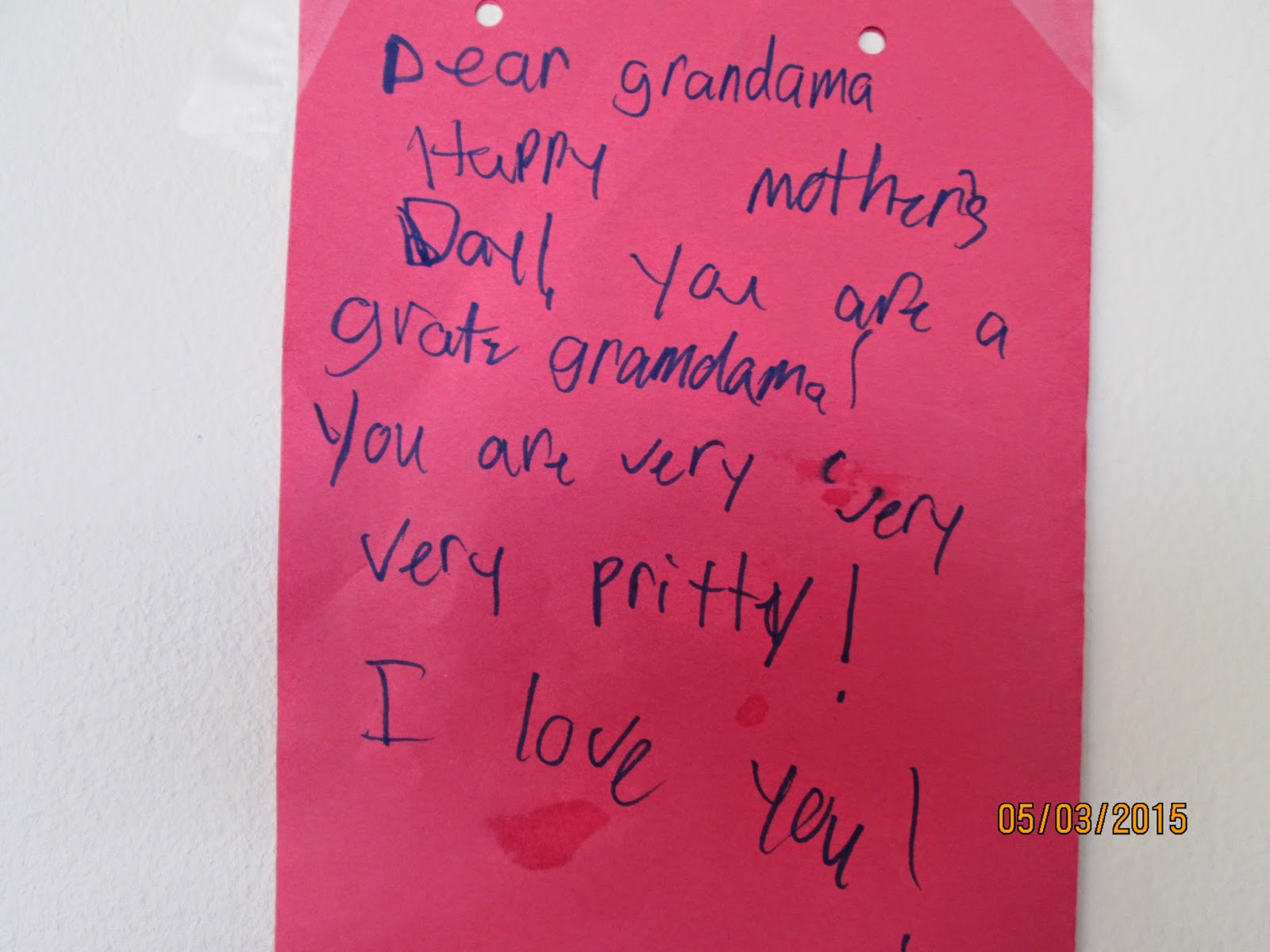
On Mother’s Day we honor mothers, grandmothers, even great grandmothers. We make this a special day for them in a variety of ways, by visiting, by sharing a meal together, by sending or giving cards, gifts, flowers, plants. Anna Jarvis, the American founder of Mother’s Day, is quoted as saying in 1908 that printed cards mean nothing “except you are too lazy to write to the woman who has done more for you than anyone in the world.” So if you’re sending or giving a card, make certain you include a personal message. Even just a phone call is generally appreciated. This connection is important for both child and parent.

For many of us, who have lost mothers, we wish to honor their memory as well. We recall their love and devotion. My own close relationship with my mother is often reflected in my writing. Even my latest YA novel THE DEVIL AND DANNA WEBSTER which is classified as a romance has just as much to do with a mother daughter relationship and family values.

I will spend Mother’s Day with my sons, daughters-in-law, grandchildren and my husband. I consider myself very fortunate. We’ll  share lunch together. And I will enjoy their company. But I will also remember my own mother, someone I never forget, a woman who died too early.

Some years ago, I wrote a poem that was published in a lovely anthology entitled WISDOM OF OUR MOTHERS, edited by Eric Bowen. It seems fitting to share that poem for this holiday.

Mother's Day

Mother--
moldering in the earth these many years,
how much I miss you.
As I stare at uneaten oatmeal
thickening in old bowls,
memory washes over me
like Wolfe 's eternal river,
a beckoning brook
meandering through timeless shoals
and mossy, macerated rocks.
Mother's Day should be special.
I have it on the good authority of every greeting card.
Mother--why do they refuse to eat their oatmeal?
What would be your words of wisdom?
Don't throw out the love with the oatmeal?
Part of me was buried with you.
Part of you lives on in me--
Mother.


Sunday, May 3, 2015

Making Mother’s Day Memorable by Jacqueline Seewald

How much do you know about the origins of this holiday? The earliest history of Mother’s Day appears to date back to the ancient annual spring festival the Greeks dedicated to maternal goddesses.

Early Christians celebrated a Mother's Day of sorts during the festival on the fourth Sunday of Lent in honor of the Virgin Mary. In England the holiday was expanded to include all mothers and became known as Mothering Sunday.

The idea of an official celebration of Mother’s Day in America was first suggested by Julia Ward Howe in 1872.  She initially became famous with her Civil War song, "Battle Hymn of the Republic". Anna Jarvis is actually recognized as the Founder of Mother’s Day in the United States. She never married or had children herself. However, she got the inspiration for celebrating Mother’s Day from her own mother Mrs. Anna Marie Reeves Jarvis, an activist and social worker. Mrs. Jarvis expressed a desire to have a day set aside to honor all mothers, living and dead, and pay tribute to the contributions made by them. 

 By 1911, Mother's Day was celebrated in almost every state in the
Union, and on May 8, 1914, President Woodrow Wilson signed a Joint Resolution designating the second Sunday in May as Mother's Day.  Mother’s Day is now celebrated in several countries including the US, UK, India, Denmark, Finland, Italy, Turkey, Australia, Mexico, Canada, China, Japan and Belgium. People take the day as an opportunity to pay tribute to their mothers and thank them for all their love and support. Sadly, Anna Jarvis became disillusioned by the commercialization of the holiday.

Today mothers are honored with many kinds of gifts: cards, perfume, jewelry, candy, flowers, plants. If a mother is a reader, books are great Mother’s Day gifts, either print or digital. (Of course, I recommend my own novels.)

What most of us who are mothers appreciate most is simply spending time with our children. Sharing a meal like a brunch or dinner together is one way of making the day special. If children live and work too far away to visit, a phone call is always appreciated.


What are your thoughts regarding Mother’s Day? How do you think this holiday should be spent? What would make it memorable in your opinion?