Thursday, October 25, 2018

The Real History of Halloween


Ever wonder what the real deal is concerning this holiday? The paranormal aura and mystique surrounding Halloween connects to a series of beliefs, traditions and superstitions. What is the actual origin of Halloween?  It appears to date back to the ancient Celtic festival of Samhain.  By Celts we refer to the people who lived approximately 2,000 years ago in Ireland, the United Kingdom, and northern France, celebrating their new year on November 1. This day marked the end of summer harvest and the beginning of dark, cold winter, a time of year often associated with human death.
Celts believed that on the night before the new year, the boundary between the worlds of the living and the dead became blurred. On the night of October 31, they celebrated Samhain, believing that ghosts of the dead returned to earth. In addition to causing trouble and damaging crops, Celts thought that the presence of the otherworldly spirits made it easier for the Druids, or Celtic priests, to make predictions about the future.  The Druids built huge sacred bonfires, where the people gathered to burn crops and animals as sacrifices to the Celtic deities.

During these celebrations, Celts wore costumes, typically consisting of animal heads and skins, and attempted to tell each other's fortunes. When the celebration was over, they re-lit their hearth fires, which they put out earlier that evening. This symbolic lighting was done from the sacred bonfire to serve as a protection during the coming winter.
By 43 A.D., the Romans had conquered a majority of Celtic territory. During the course of the four hundred years that they ruled the Celtic lands, two festivals of Roman origin were combined with the traditional Celtic celebration of Samhain. The first was Feralia, a day in late October when the Romans traditionally commemorated the passing of the dead. The second was a day to honor Pomona, the Roman goddess of fruit and trees. The symbol of Pomona is the apple and the incorporation of this celebration into Samhain probably explains the tradition of "bobbing" for apples that is practiced today on Halloween.
By the 800’s, the influence of Christianity had spread into Celtic lands. In the seventh century, Pope Boniface IV designated November 1 as All Saints' Day, a time to honor saints and martyrs. The pope was attempting to replace the Celtic festival of the dead with a related, but church-sanctioned holiday. The celebration was also called All-hallows or All-hallowmas (All Saints' Day) and the night before it, the night of Samhain, began to be called All-hallows Eve and, eventually, Halloween. Even later, in 1000 A.D., the church designated November 2 All Souls' Day, a day to honor the dead. It was celebrated similarly to Samhain, with big bonfires, parades, and dressing up in costumes as saints, angels, and devils.
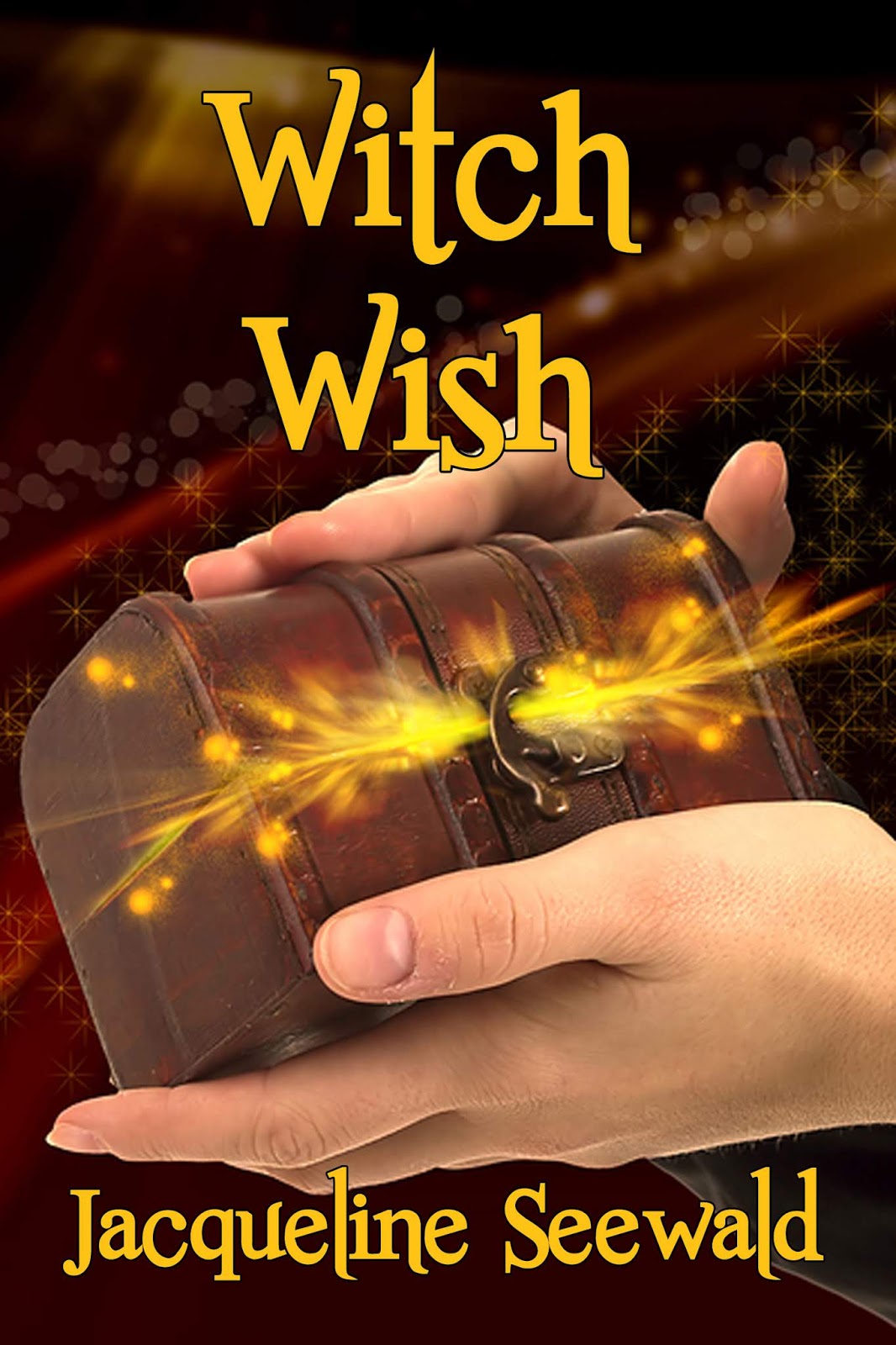
Tales of the supernatural are ever popular during the Halloween season. Black Opal Books recently published WITCH WISH, my YA novel with a supernatural twist. If you are a teenager or have one in the family, you might like to order this book:
 
               https://www.amazon.com/dp/B07DRB3VVH
 
https://itunes.apple.com/us/book/witch-wish/id1401568260?mt=11
 
This follows THE DEVIL AND DANNA WEBSTER, available in 
all e-books as well as print.

                  http://www.amazon.com/dp/B00JZYXW7K/

Also available, DARK MOON RISING, Gothic romantic suspense from Luminosity for adult reading, available in all e-book formats and print as well.


Are there any books that you consider good Halloween reading choices? If so, please share with us.

Thursday, October 11, 2018

What Scares Us?


What are we most afraid of? According to the Answers Issue of TIME MAGAZINE, most Americans’ biggest personal fear—even more than public speaking—is walking alone at night. That would certainly rank up there for me. Do you feel the same?

In honor of Halloween, it seems only fitting to write on the subject of horror fiction. Why do readers want to read it? When people talk about horror fiction, they might let out an involuntary shudder. However, horror fiction isn’t just about the gruesome. It’s not just about the supernatural, ghosts, goblins, ghouls, gremlins, etc. No, it’s really about what we fear, what we dread most. These things may be ordinary, like a pit bull off the leash running toward us, or extraordinary, like meeting a vampire in a neighborhood bar at midnight. We have fears that are both usual and the unusual.

Horror fiction will not be going away any time soon because it is human nature to feel fear as an emotion. Horror fiction helps us handle these feelings, helps us confront our terrors, those within us and those in the environment around us. I have read Dean Koontz and Stephen King, Anna Rice and many writers of occult mystery and romance fiction with interest.

My adult novel DARK MOON RISING is a Gothic romance that features female ghosts from different centuries who haunt male members of an aristocratic family. The novel combines romance, mystery, suspense and paranormal horror. As I wrote some of the chapters, I confess I actually frightened myself.
                                             http://www.amazon.com/dp/B00Z7824A4/ 

                 My latest YA novel WITCH WISH has a supernatural edge.

https://www.amazon.com/dp/B07DRB3VVH
 
https://itunes.apple.com/us/book/witch-wish/id1401568260?mt=11
 

THE DEVIL AND DANNA WEBSTER, my prior YA, has a Faustian theme.


               http://www.amazon.com/dp/B00JZYXW7K/


THE BAD WIFE, 4th mystery novel in the Kim Reynolds series, also has a paranormal edge. Kim, an academic librarian, is a reluctant clairvoyant who has visions which cause her to both solve and prevent crime.
                        
                                    http://www.amazon.com/dp/B00J6PCKVW 

Back to my initial question: what scares us? Global warming has me seriously concerned. It was the impetus for my novella THE BURNING which deal with the suffering experienced by a family and an entire community due to a coal fire burning underground. It’s reality based.


The New York Times recently published information on climate
change which supports the inferences of my factional fiction:
click&module=Most%20Popular&pgtype=Homepage


What are your thoughts and opinions? What frightens you?

Friday, October 5, 2018

Interview with Andrew MacRae, Publisher of Darkhouse Books

I have the pleasure of interviewing Andrew MacRae who has published numerous short stories, mostly in the crime and science fiction genres, and two novels, Murder Misdirected and Murder Miscalculated, both about a reformed pickpocket who keeps getting into trouble. A misplaced Midwesterner, he now lives in Northern California.
 As editor-in-chief at Darkhouse Books, Andrew has edited anthologies of stories, essays, and poetry, including Black Coffee, Stories from the Near-Future, Descansos. and The Anthology of Cozy-NoirDarkhouse Books’ fall releases are Sanctuary, Duck Lessons, and Shhhh… Murder!


Question: What is the title and genre of your most recent anthology?  Why did you select them?

Answer:ShhhhMurder!” Mostly-cozy crimes set in and around libraries. As for how stories were selected, I am easily seduced by a story with a great opening and with an ending to match. With regard to this anthology, we looked for stories that (mostly) celebrate libraries and librarians.


Question:   What inspired this book? How did it come about?

Answer: Date-stamp ink runs in my family’s blood, and libraries have always been our second home. Besides, what better setting for cozy mysteries?


Question:   Can you tell us about some of your other published books?

Answer:  We have close to twenty titles available now. They are mostly crime fiction anthologies and novels, along with a smattering of science fiction titles. We have recently added a literary side to Darkhouse Books with two anthologies, Descansos and Sanctuary, as well as a collection of short stories by James LeCuyer, and two collections of poetry due out in a few months.


Question:   What are you working on now?

Answer:  Developing themes and timelines for our next anthologies. There’s a surprising amount of planning that must go into such. We are also devising a strategy for publishing novellas, either as three to a book, or standalone.

Question:   What made you start publishing?

Answer:  The confluence of the invention of print-on-demand paperback printing and the widespread acceptance of eBook readers allowed me to fulfill a life-long dream, one that began with a toy rotary printer in the fifth grade.

Question:   What advice would you offer to those who are currently writing?

Answer: To paraphrase Robert Heinlein: Keep writing. Don’t stop writing until your story is done. Then send it out and keep sending it out until your story is published.

Question:  Where and when will readers be able to obtain your book?

Answer:  (buy links)
Our catalog may be found on our website, as a rotating carousel. http://www.darkhousebooks.com

Shhhh… Murder! is available now in paperback and eBook format. Bookstores and libraries may order it through their regular vendor, Ingram, via the name or the ISBN number. (978-1-945467-14-1).
Barnes & Noble paperback: https://bit.ly/2xrCXou
Amazon paperback: http://a.co/d/8eV6nor

 Andrew is available for questions and comment.

Friday, September 21, 2018

How to Create Characters Readers Care About


Readers need both an emotional and intellectual connection to fiction or they won’t continue reading. If this connection isn’t created, readers will simply say: So what? Then they’ll toss what they’re reading aside and look for something else. Since we writers put their blood, sweat and emotional existence into giving birth to our babies, it’s natural to want our work read. So how do writers create fiction that readers will care about? It’s not a secret. The answer lies with the characters.
Writers must first know their characters.
It is not enough to have a general idea of a character in your head when you start writing. You have to live and breathe the character, know him/her the way you know yourself. In essence, realistic characters are extensions or facets of yourself. My suggestion: Create a detailed written character study of each main character before you begin to write your story or novel.
Here are a few items to consider:
Names
Shakespeare asks: What’s in a name? Clearly, a whole lot. A sweet young thing might have a soft-sounding name while a villain might have a hard-sounding one. What about ethnic names? Are they appropriate or inappropriate for your work?
Another thing you need to keep in mind is not to give characters names that might confuse readers. Names that are too similar in nature--for instance, Jane and Jana--should belong in different stories.
The name of your character will likely cause an assumption of gender, unless you are trying to keep it ambiguous. When I introduced African-American detective “Bert St. Croix” early in the novel THE DROWNING POOL, it comes as something as a surprise that she is a woman. She is tall, strong and fierce. A more masculine name fits her character. Readers don’t learn her back story right away, only the contrast that she has great sympathy and compassion for those who are in need of help but is tough with criminals. Nicknames are also something to consider. Does your character have a nickname like “Bert" short for “Roberta”? What might that suggest about the character?
Age
Age at the time of the story is significant. Is your story about an adult, a teenager, a child?  Point of view and voice differ with each. Also consider how the time period the character lives in effects personality and beliefs. This is especially important in historical fiction.
 In THE THIRD EYE: A PINE BARRENS MYSTERY, the novel is told from two distinct viewpoints--that of a teenage boy and his troubled mother. Point of view is very important. The chapters alternate between Jim and his mother. Jim tells his story in the first person present tense while his mother’s chapters are in third person past tense. Vocabulary and use of language are unique to each character.
Also, the reader understands things the characters do not comprehend particularly when the main character is telling the story from a first person viewpoint. The unreliable first person narrator is very common to mystery fiction. Sometimes the reader knows just what the narrator knows while other times the reader knows more. Dramatic irony can build tension and suspense.
Back Story/Personal History
Although you know your character’s back story or personal history, the reader should learn it slowly, piece-meal, bit by bit. This makes your character interesting and adds an intriguing aura of mystery which causes readers to turn the pages to find out more details about the character.
Making Your Character Sympathetic
Characters need to be relatable as well as real. This means they need to have good qualities that readers like but also character flaws just like an ordinary person. They also need to have goals and ambitions that they’re striving toward. I prefer to make my main characters sympathetic but complex.
Danna the main character in THE DEVIL AND DANNA WEBSTER wants to leave her life of poverty behind. Her ambition is to be an artist. But Danna is confused in her values and family perceptions. Jennifer Stoddard in THE INHERITANCE is a widow raising a small child and in financial distress.
Appearance
It’s important to know how your characters look. Not only should you have a picture in your mind but you need to describe in words how the characters appear: short, tall, handsome, beautiful, ugly, fat, thin, eye color, hair color.
Mannerisms are important as well. Does your heroine bite her nails, twist locks of her long hair? Does your hero flex his muscles? Does your villain speak in a soft, menacing voice?
Relationships
Start first with the family members, especially if they are an important part of the story. Who are the parents, siblings and extended family of your character? It’s not enough to just come up with names for them when developing your main subject. What are they like? Provide descriptions, personalities, etc. Are there any problems your character has with them? Kim Reynolds, the academic librarian sleuth first introduced in THE INFERNO COLLECTION, has a complex family dynamic that includes dark secrets.
What about friends? If they play a part in the story, we need to know your main character’s interactions with and feelings about them. In the Kim Reynolds mystery series, Kim comes to love police detective Mike Gardner. Their relationship is complicated in THE TRUTH SLEUTH by the return of Mike’s wife, Evelyn, who becomes THE BAD WIFE in the 4th novel in this series.
Kim and Bert St. Croix also become close friends, and in THE BAD WIFE, they work together and quite literally save Mike’s life.
Personality
 Get to know your character’s strengths and weaknesses, attitudes, fears, obsessions, special talents and hobbies. How does your character think, speak, act? What do other characters say about him/her?
Weave body language in with dialogue. This often creates subtle emotional signals. What is said may be in contrast to what the character actually thinks and feels. Val Williams, the central character in my new YA novel WITCH WISH, has a sharp sense of humor, but she is also jealous of her older sister and hurt by her mother’s antipathy.
When you write a scene where there is interaction between characters, try to visualize it as you would see it in a film. There’s nothing wrong with having the image in your mind of real people. It’s also okay to eavesdrop on conversations and be an objective observer which will provide you with material for your writing.
In DEATH LEGACY, Michelle Hallam is a mysterious English woman who has been trained in intelligence work. She is wary and guarded while Daniel Reiner appears to be open and more balanced in his approach to life. They are very different people who come together as lovers and detectives to solve a murder espionage mystery as their lives are placed in jeopardy putting them increasingly in danger. In DEATH PROMISE, the two return to solve yet another murder mystery; their complex relationship remains a key factor in the novel. The dialogue between them shows their differences while being entertaining and advancing the plot.
Okay, I’ll reiterate a few points:
1. Be selective in choosing the names that convey what you want readers to visualize about your character.
2. Appearance is important. What does your character look like? Description can convey much about character. But don’t overdo it. As the old saying goes: show don’t tell.
3. What is special about your character’s speech? Are there unique phrases used? Dickens was a master of this. Also, dialogue should seem natural, the way real people talk.
4. Get into the mind set of your character. How does your character think?  James Joyce is a good writer to read for internal monologue technique.
5. How does your character act, react and interact with others?
6. What do other characters say about him/her?
7. Does the entire presentation have verisimilitude? Do your characters seem real and believable?
8. What values and goals are unique to your character?


Your comments, observations and input are very welcome here!

Thursday, September 6, 2018

How to Create Fiction Readers Can’t Put Down


I’m going to make this brief—short and sweet just as it deserves to be.

My advice: WRITE TIGHT!

Stephen King once wrote a great article on this topic. He explained how it’s necessary to eliminate unneeded verbiage. His advice: avoid repetitions and redundancies. Of course, you will only recognize this if you revise ruthlessly. Self-editing is crucial.

My suggestion: Put away your work of genius for a time. Work on something else. Then come back to it at a later date when you can examine the initial writing with fresh, critical eyes. Trade your writer’s hat for that of editor.

Victorian writers could get away with long descriptive passages but there was no television, computers or smart phones in their era. People were willing and eager to read long books and stories for recreational entertainment. Not long ago I read that the average attention span of today’s readers was shorter than that of a fruit fly. So we must cleverly contrive not to lose their attention.

How to do this? Start a book or story in medias res. Begin in the middle of a scene of some significance. Something important should be happening. Dialogue and action are crucial. You don’t want a static beginning. Description, internal monologue, narration, flashback and reflections all have their place, but they need to be limited, and they should not occur at the beginning of a work.

Instead, intrigue the reader by starting with some form of mystery. Make your reader curious from the first and then keep them guessing. Don’t slow the pace. Keep the tension building. Increase the danger and/or the obstacles. This goes for any genre of fiction whether it is romance, sci-fi, mystery, literary etc.

I was very pleased with the statement of the reviewer for LIBRARY JOURNAL who wrote regarding my latest mystery novel 
DEATH PROMISE:

“The plot kept this reviewer turning the pages."


Your thoughts and comments welcome.

Wednesday, August 22, 2018

How to Write YA Fiction that Sells

Even before J. K. Rowling's tremendous success with her Harry Potter series, publishers were frantically searching for fantasy and horror fiction for children and teenagers that they hoped would top the bestseller list. Imitation may be the sincerest form of flattery, but it does not insure success as a writer. Here are my suggestions:

Tip One: You don’t need to copy current market trends. (Honor bright!)

Teens have varied tastes in fiction. Not every teen or juvenile book needs to feature werewolves, vampires, witches, goblins, etc. Witness the huge success of such realistic teen novels as THE FAULT IN OUR STARS. Note that ALL THE LIGHT WE CANNOT SEE by Anthony Doerr which won the 2015 Pulitzer Prize for Fiction could easily be read and understood by teens as well as adults since the novel is suited to both. Here we have a book which is historical in nature. Teens are as curious about the past as they are about the present and the future.

Books set in the "real" world do have appeal for teenagers. Teens are not necessarily trying to read books that provide a total escape from reality. Even fantasy books need to be believable, providing an element of reality through character development to which readers can relate. In the crossover novel THE THIRD EYE: A PINE BARRENS MYSTERY, the real world is seen through the eyes of a teenage boy while his mother experiences it through an alternate reality. The paranormal elements in the novel are believable because the “real” world interacts with them.


Dystopian novels are still popular at the current time.  But trends change rapidly. My advice, don't write for the market; write the story you need and want to write. We are all writers. We all have within us an important, wonderful story to share. Get in touch with your inner teen self.  Strive for authenticity.

Tip Two: Develop a unique voice.

This is one of the most important things in writing a successful young adult novel. This does not mean that you must write only from a first person point of view. However, teenage readers often respond well to a first person narrative. But ”voice” has to do with choice of vocabulary and style as well. In my YA novel,
STACY’S SONG, the story is written in the first person from the main character’s point of view. Stacy has a sense of humor and a unique perspective.


Tip Three: Character identification is significant.

It is important to create a central character that young readers can both sympathize and identify with. Whether writing realistic or fantasy fiction, if the reader can't care about or relate to the main character, then he or she won't believe or accept what follows.  A main character needs to be well-rounded, think and feel the way adolescents do.

Tip Four: Know teenagers.

If you are going to write about teens, you need to know them. Do some research. Besides raising two teenagers, I taught English and later Library Science. I taught at all levels: the university, high school, middle school and elementary. But most of my years were in the high school. I am accustomed to the way teenagers think, talk and behave. If you are not a teen yourself, talk to teenagers, read their magazines, watch their favorite TV programs, observe how they behave at malls, amusement parks, movie theaters etc.  Listen to them.

Tip Five: Recall your own teenage memories.

Dig deep into your psyche. How did you feel as a teenager? Were you confused about certain things? What made you happy? What troubled you? What are your most vivid memories of those times? Did you keep a diary or journal? If so, reread some of what you wrote.

My YA novel, THE DEVIL AND DANNA WEBSTER, published by Clean Reads in all e-book formats and print, is the story of a girl who has identity issues. She is also faced with peer pressure and conflicting values. Most of us have gone through similar problems as adolescents.


Tip Six: Get input from your own children.

Ask your teenagers to read your writing and critique it. Consider collaborating with your children on the writing of your fiction. I wrote WHERE IS ROBERT?, a YA mystery novel, with help from both of my sons who were teenagers at the time. Both boys contributed to the scenes of high school wrestling, since they both engaged in the sport. I couldn't have written the book without them. My son, Andrew, co-authored THE THIRD EYE: A PINE BARRENS MYSTERY published by Five Star/Gale/Cengage. He gave the teenage boy narrator an authentic “voice”.

Tip Seven: Make it dramatic.

Think like a cinematographer. Create vivid scenes. Dramatize your story. Don't just tell your story, show it. I'm certain you've heard that advice before! How to do this? Create meaningful, realistic dialogue for your characters. Each character should be an individual, talking in a certain distinct way to reflect a personal point of view, a unique way of thinking. Good dialogue leads to action and conflict between people with different viewpoints and goals.

Also, settings need to be described so that they seem real. In fact, there's nothing wrong with using real places for background setting. My five published YA’s are all set in Central New Jersey, an area very much like the one in which I lived and worked.

Tip Eight: Begin with an outline.

Outlines can be rough. They don’t need to be detailed. But you should have some idea about arranging the events of the plot line. This will be something to consult when writing your first draft with your key characters and scenes.

Tip Nine: When you develop your book, look for depth.

 Although books for teens are usually shorter than those for adults, that doesn't mean they require less creative thought. Respect your readers; give them quality.

Tip Ten: Provide an element of mystery.

Teens as well as younger children enjoy a mystery. Every good work of fiction should have a plot that keeps the reader turning the pages, wanting to discover what is going to happen next. It's important to set up some sort of a question that can't be easily or immediately answered, a secret of the human heart that must be delved into.

Tip Eleven: Develop key themes in your YA fiction.

Teen novels are generally about coming-of-age, of finding personal identity, making sense of the adult world, relating to it and fitting into it—or not.

My latest YA novel is WITCH WISH. Val Williams believes she will never be as pretty or popular as her older sister Ailene. When Ailene dumps her on an unfamiliar road after an argument, Val decides to ask directions of the only person she sees, an old woman engaged in a garage sale. Val purchases a music box which the old woman claims has magical qualities and will grant Val one wish. Val wishes that that her sister would stop being so perfect but soon comes to regret her wish.


                  https://blackopalbooks.com/witch-wish/ 
 
                  https://www.amazon.com/dp/B07DRB3VVH


The success of J.K. Rowling’s books gave new hope and inspiration to those of us who write juvenile fiction. No longer could we gripe that children and young adults do not read. If nothing else, the reception the Potter books received proves that there is an audience for fiction among young people. Also, such books if well-written have a strong appeal for adult readers as well—think of THE HUNGER GAMES, DIVERGENT or the TWILIGHT series.

Your comments, suggestions and input welcome here!


Friday, August 10, 2018

Summer Reading 2018


It’s that time of year again when every magazine, newspaper and newsletter offers suggestions on summer reading. So why should this blog be any different?

Summer is the perfect time to spend some time vacationing or just relaxing. Sit in the sun, lie on a chaise poolside, rest by the ocean or a lake, or under the shade of a tree, sip a cool drink, and read a book—hard cover, soft cover or digital.

Mysteries remain one of the most popular genres for summer reading. Why? Because they entertain us. They also engage our intellect in a satisfying manner. Romances provide us with a happy ever after ending. If you like reading for enjoyment, it’s the way to go.

Lots of good summer reading on the bestseller list.
But what about some of the excellent authors who write for small independent presses and provide us with quality fiction but don’t get as much publicity because they are not with the big publishers?

I recommend Patricia Gligor’s latest novel Secrets in Storyville which I recently reviewed on Goodreads. It’s an absorbing mystery that’s quite original. Another fine mystery is A Murder of Principle by Susan Coryell, a perfect summer read for those who enjoy mystery thrillers, ditto the extremely well-reviewed mystery Murder in the One Per Cent by Saralyn Richard. You can check these out on Amazon.

I also modestly recommend my latest mystery novel
Death Promise, a romantic mystery thriller.


For romance lovers, check out Daisy Dukes ‘Cowboy Boots by the writing team known as Zari Reede. I enjoyed reading this novel as well.

There are many other fine writers who can be added to this list. As a reader and/or writer are there any authors and/or books you would like to recommend for summer reading? You are most welcome to mention your own books.